Australians generally do not perceive consent requests as meaningful choices, with many viewing them as something they must accept to use a service. Similarly, sharing personal information in everyday situations is often seen as unavoidable rather than optional, particularly when access to essential services or opportunities is at stake. These perceptions are accompanied by a strong sense of limited control over personal information and a belief that opting out is not a realistic option, reinforcing a broader feeling of compulsion rather than genuine agency.
Meaningfulness of consent
Australians generally do not feel that ‘consent to use data’ represents a genuine choice, with around two-thirds (68%) saying it rarely or never feels like a real choice and instead something they have to click through to continue.
Figure 25 Perceived meaningfulness of consent when organisations use personal data
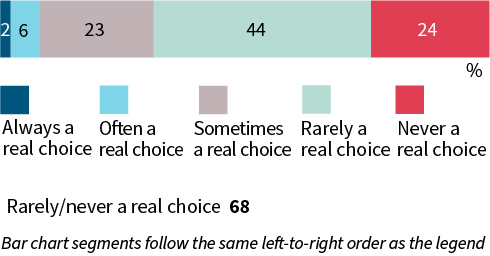
FAIR4. When organisations ask for your consent to use your data, how often does that feel like a real choice - or just something you have to click to keep going?
Base: All Australians aged 18+. (n=1,504)
Notes: Don’t know (0%) and refused (0%) not displayed.
Perceived control over personal information
Similarly, in everyday situations, sharing personal information is also not seen as a genuine choice, with two-thirds (65%) saying it rarely or never feels like a real choice and is instead something they must accept to access services.
The feeling of rarely or having no real choice in sharing personal information is higher among those who always or often accept privacy policies without reading them (72% vs 51% of those who do so less often).
Figure 26 Perceived choice when sharing personal information in everyday situations
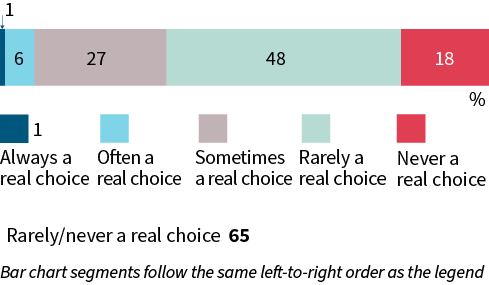
PAR4. In everyday situations, how often does sharing your personal information feel like something you can genuinely choose, rather than something you have to accept to use a service?
Base: All Australians aged 18+. (n=1,504)
Notes: Don’t know (0%) and refused (0%) not displayed.
Reflecting this lack of choice, most Australians feel they have limited control over their data, with over three-quarters (78%) reporting very little or no real control over how their personal information is collected and used, including managing privacy settings, opt-outs, or deletion.
Figure 27 Perceived level of control over how personal information is collected and used
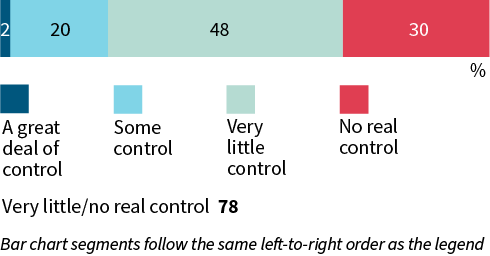
PAR2. How much real control do you feel you have over how your personal information is collected and used (for example, through privacy settings, opt outs, or ways to delete your personal information)?
Base: All Australians aged 18+. (n=1,504)
Notes: Don’t know (0%) and refused (0%) not displayed.
Acceptance of data sharing to avoid service exclusion
As a result, many Australians feel compelled to share personal information, with over half (52%) agreeing they do so because not sharing would mean missing out on essential services or opportunities, particularly among those aged 25–49 compared to older Australians aged 50+ (58% vs 46%).
Figure 28 Accepting personal information sharing is a condition to accessing essential services or opportunities
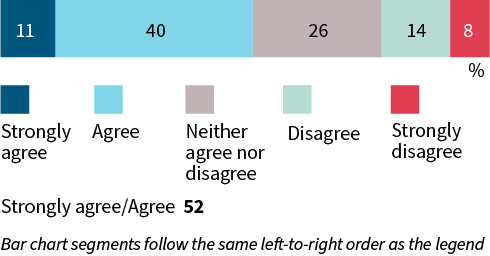
PAR3. To what extent do you agree or disagree with the following? a) I accept sharing personal information because not sharing personal information would mean missing out on essential services or opportunities.
Base: All Australians aged 18+. (n=1,504)
Notes: Don’t know (0%) and refused (0%) not displayed.