-
On this page
What is the Children’s Online Privacy Code?
In 2024, new privacy laws, known as the Privacy and Other Legislation Amendment (POLA) Act 2024, ordered the development of the Children’s Online Privacy Code (the Code).
As Australia’s privacy regulator, the OAIC is responsible for creating the Code.
The Code puts children and young people at the centre of online privacy protections in Australia.
When we refer to ‘children’ and ‘young people’ we mean individuals under the age of 18.
This new Code will help protect children's online privacy by telling many online services, like apps, games, and websites, how they need to follow special privacy rules when taking care of children's personal information online.
Personal information is things like your name, address, email, phone number, school, date of birth, photos or videos of you, location, and online activity.
Protecting your personal information online is one important step to protecting your online privacy.
Have your say about the draft Code
We want to hear from children, young people, and parents/carers about the draft Code.
Learn how to participate in the consultation
Important fact:
This Code is different from the Social Media Age Restrictions, which removed under 16s from age-restricted social media platforms. You can learn more about that at Social Media Minimum Age.
The Children’s Online Privacy Code does not delay children from engaging in the digital world. Rather, the Code protects children when using online services at any age, by strengthening the privacy protections of their personal information.
The Code will apply to social media services, including age-restricted social media platforms where 16 and 17 year olds may have accounts.
Why do we need a Children’s Online Privacy Code?
We need the Code to help protect children’s privacy because many online services like apps, games, and websites collect children’s personal information from a young age.
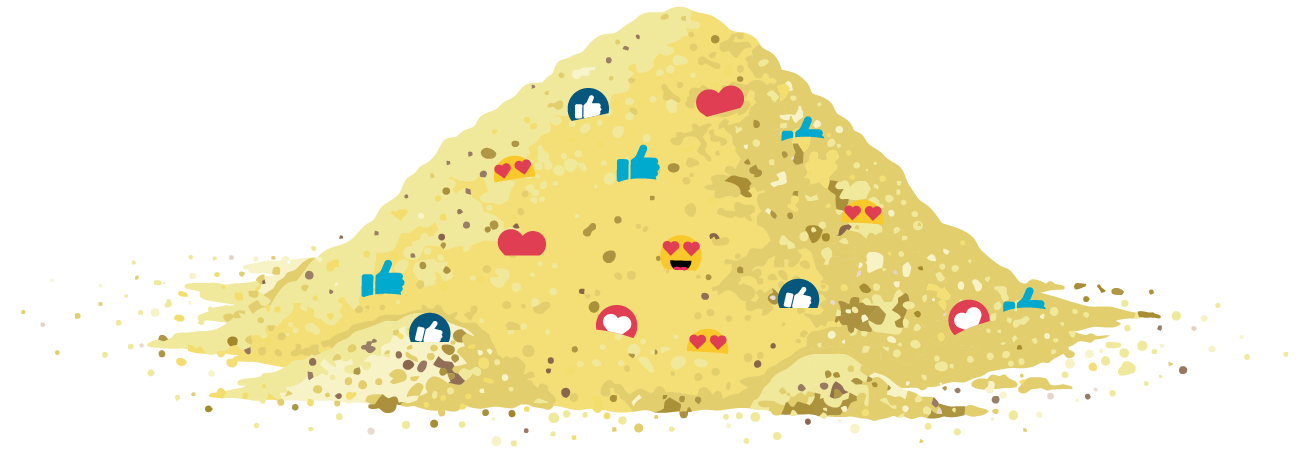
Did you know?
By the time you turn 13 years old, there may be around 72 million bits of information about you on the internet? That’s a lot!
When online services follow the Code, you will be given the chance to learn more about what happens to your personal information online.
This will allow you and your parents or carers to choose what personal information you want to share with online services.
This gives you and your parents or carers more control of your personal information.
Having more control about what online services do with your personal information helps protect your online privacy.
What is online privacy?
All human beings have a right to privacy.
Privacy means that you get to make decisions about the things that affect you, that you get to think and believe what you want, and that you get to control your own body.
The right to privacy means you get to choose when to give other people information about you, and what they do with that information.
This is especially true when it comes to personal information, which is things like your name, address, email, phone number, school, date of birth, photos or videos of you, location, and online activity.
Privacy means keeping some things to yourself and only sharing them with people you trust, like your parents or best friends.
Just like you don’t want someone looking through your backpack without asking, you don’t want apps or websites taking your personal information, like your name, photos or favourite games, without your permission.
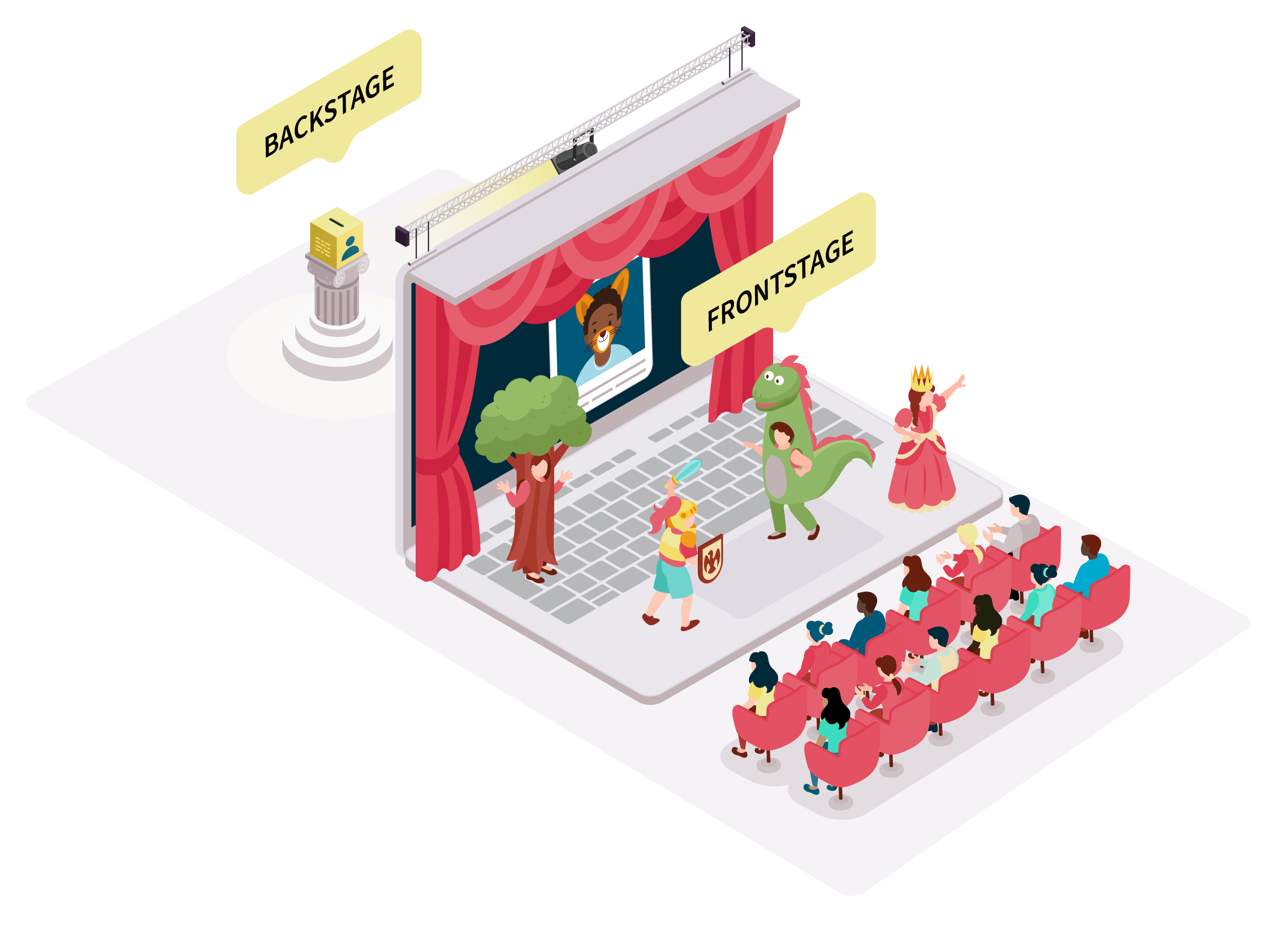
Think about online privacy like a stage where you watch school assembly or a music concert, where the frontstage and backstage are separated by a curtain.
The frontstage is in front of the curtain and is where everyone in the audience can see what is happening. The frontstage is like where you or other people share things about you online for other people to see (like sharing photos of you with your friends and family). To help protect your online privacy frontstage, you and other people (like your family, friends, school and clubs) need to think carefully about what is shared publicly for others to see.
The backstage is behind the curtain and is where only the people running the show can see what is happening. The backstage is like where you share your personal information with an app, game, or website to use that online service. To help protect your online privacy backstage, online services need to take care of the personal information you choose to share with them.
The Code focuses on protecting your online privacy backstage. It does this by shining a light on what happens to your personal information behind the curtain, telling online services how to take care of children’s personal information, and giving you more control with what happens to your personal information online.
Who decides what goes into the Code?
At the OAIC, we have the important job of creating the Children’s Online Privacy Code. Carly Kind, the Privacy Commissioner
We have been thinking carefully about what needs to go in the Code, and we continue to ask all the important people - like children, young people, parents and carers - the big questions so we can get it right.
In 2025, we asked primary and secondary school-aged children to tell us how they felt about online privacy.
More than 235 children wrote answers to our questions!
When we ask people to give us their feedback on the Code, that is called a “consultation”.
We put this information a report called the Children’s Online Privacy Code – Children’s Consultation Report.
Read the Children’s Online Privacy Code – Children’s Consultation Report (PDF, 533 KB)
We have also asked lots of adults who care about children’s online privacy to tell us what that they think about the Code. This includes:
- child welfare groups
- researchers
- people working for different online services
You can also learn more about our past consultations.
Can I read the Code?
Yes! The Code is currently a draft. Think of it just like the first version of a speech you rehearse with your parents or carers, or a practice written response you would share with your teacher for feedback at school.
We are still planning what special rules online services should have to follow, but we are showing you what we have brainstormed so far to get your feedback.
The official draft Code is a long document filled with lots of words that relate to the law.
That is why we have worked with a group of young people to help make child-friendly guides that explain the draft Code.
Check out our:
- short guide, best for primary school aged children, and
- extended (longer) guide, best for young people and parents and carers.
But everyone is welcome to check out either the short or extended guides!

Do I get a say about what goes into the Children’s Online Privacy Code?
Yes, we want to hear from you!
The draft Code is now ready for your feedback.
From 31 March 2026 to 5 June 2026, we want to hear from children, young people, and parents and carers what they think about the rules in draft Code.
Have your say about the draft Code by either:
- filling out an online worksheet,
- submitting a worksheet via email, or
- sending a drawing worksheet via email.
Head to Privacy for Kids – consultation page for children, young people and parents to participate in the public consultation.
Submissions close on Friday 5 June 2026.
What happens after the consultation?
Once the consultation closes on Friday 5 June 2026, the OAIC has the important task of looking at everyone’s feedback on the daft Code.
This means taking in and considering the feedback from children, young people, parent and carers, as well as experts and the people who work for online services, to improve the final version of the Code.
The final Code needs to be ready by 10 December 2026.